
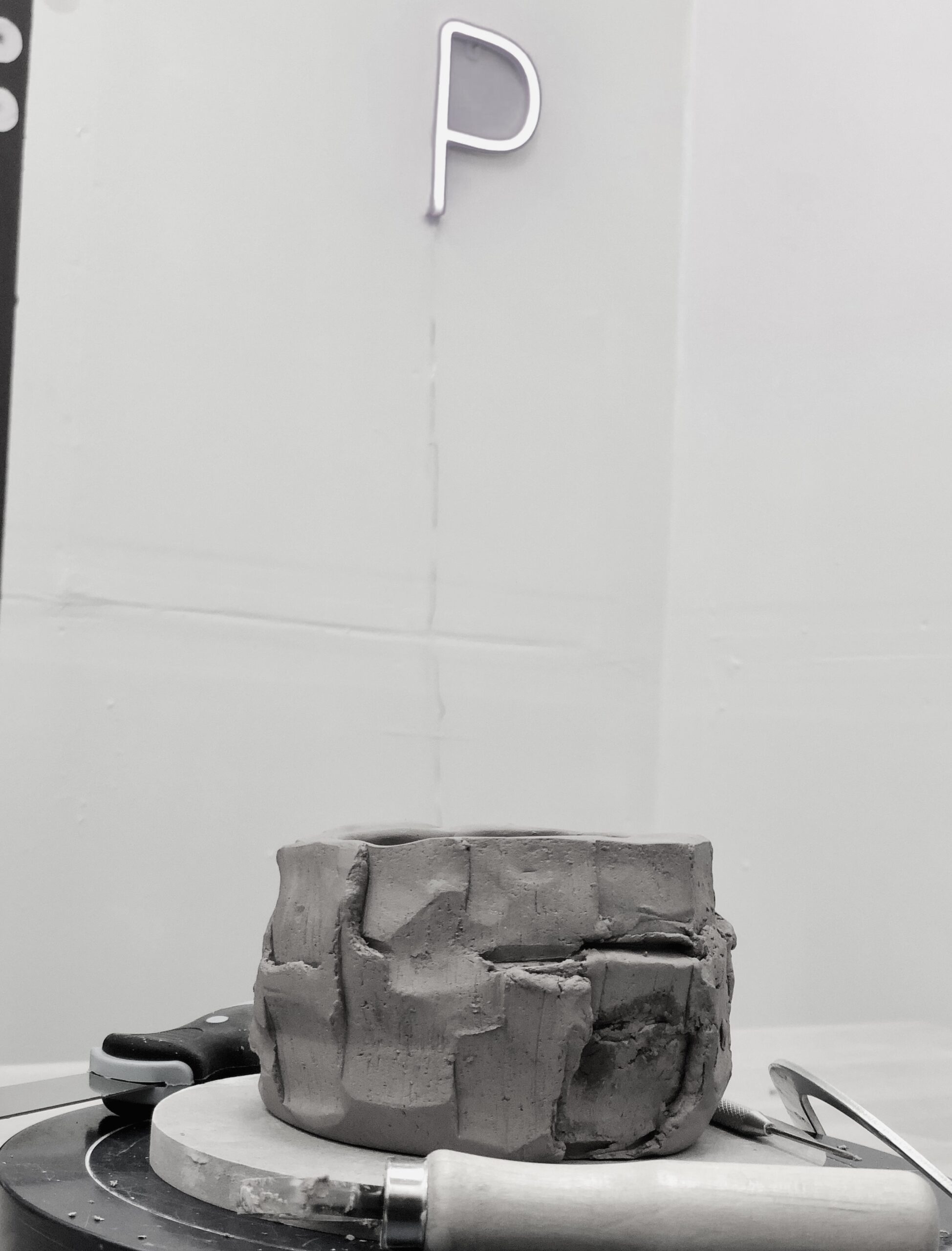
The Beauty of Carving from Solid Clay
Most pottery methods involve building coils, slabs, or the pottery wheel. Kurinuki is different. Instead of adding clay, you begin with a solid block and carve away material to reveal the form hidden inside.
The result is pottery that feels grounded, organic, and deeply personal. Surfaces show the evidence of tools and touch. Forms are often slightly asymmetrical. No two pieces are ever the same.
This subtractive approach makes kurinuki especially powerful for creating tea ware like matcha bowls and cups, where touch, weight, and texture are part of the experience.
A Brief History of Kurinuki
Kurinuki developed in Japan and is closely tied to the aesthetics of the tea ceremony. The method reflects the philosophy of wabi-sabi, which values imperfection, naturalness, and quiet beauty.
Rather than striving for symmetry or polish, kurinuki celebrates tool marks, irregular walls, and surfaces shaped by the maker’s hand. Historically, tea bowls carved in this way were admired for their earthy presence and tactile quality, qualities that made the act of drinking tea feel more grounded and intentional.
Today, potters around the world use kurinuki to create work that feels both ancient and contemporary.
Why Artists Love the Kurinuki Technique
Kurinuki offers a completely different experience.
- It is slow and physical
- It encourages intuition over precision
- It creates bold, sculptural forms
- It leaves room for texture and gesture
Because you remove clay instead of adding it, every cut matters. The process invites you to pause, turn the piece, and respond to what the form is becoming.
How the Kurinuki Process Works
1. Start with a Solid Block
A lump of clay is compressed and shaped into a soft geometric form. The outside mass is established before any hollowing begins.
2. Hollow the Interior
Clay is carved out from the top using loop tools. The walls are left thick at first, and extra clay is kept at the bottom for shaping a foot later.
3. Refine the Form
At leather hard, the interior is thinned and smoothed. The rim is shaped and compressed. Subtle curves and planes begin to emerge.
4. Carve the Foot Ring
Instead of attaching a foot, it is carved directly from the solid base. Clay is removed around a drawn circle until a raised ring becomes the contact point.
5. Develop the Surface
Tool marks, facets, and carved textures are left visible. These surfaces catch glaze beautifully and tell the story of how the piece was made.
Essential Tools for Kurinuki
You do not need many tools, but each one plays an important role.
- Fettling knife for cutting openings and shaping planes
- Loop tools for hollowing and refining walls
- Needle tool for checking thickness
- Wooden tools for smoothing and compressing
- Rib for refining edges
- Sponge for light cleanup
- Your hands for feeling thickness and supporting the form
Kurinuki is as much about touch as it is about tools.
Kurinuki and Matcha Ware
Matcha bowls, cups, and whisk holders are ideal forms for kurinuki. The technique creates pieces with weight, warmth, and texture that enhance the sensory experience of tea.
A carved foot ring lifts the form, while expressive surfaces interact beautifully with glazes that break over texture. Each bowl becomes a unique object meant to be held, turned, and appreciated from every angle.
Interested in learning how to make pieces using the kurinuki method? Register for a Potterings Kurinuki workshop, great for beginning potters or potters who want to learn more about the technique.
With step-by-step guidance, you’ll carve a complete handmade matcha set:
One matcha bowl (chawan)
One companion cup (yunomi style)
One whisk holder (chasen-tate)
Embracing Imperfection
One of the hardest parts of kurinuki for beginners is letting go of perfection. Walls may vary slightly. Rims may undulate. Surfaces may show bold tool marks.
These are not flaws. They are the heart of the technique.
Kurinuki teaches patience, observation, and trust in the process. With every piece, you learn to see the form inside the clay a little more clearly.