
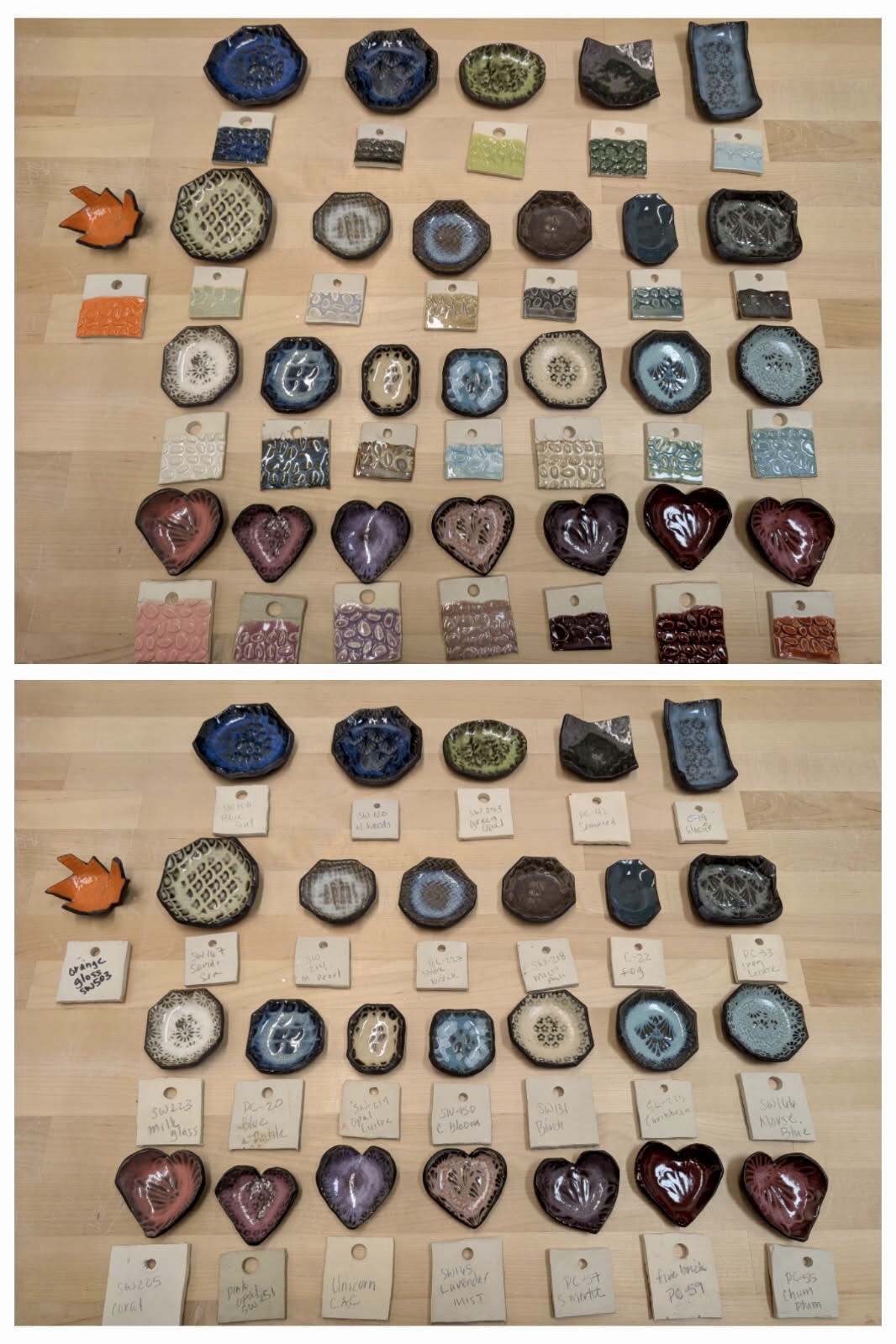
Photos and Glazing by Em, Potterings Member, follow Em on Insta here.
If you have ever opened the kiln and thought, “Wait… where did my glaze go?” welcome to the wild and wonderful world of glazing on dark clay.
Dark clay bodies like brown, red, or speckled clay are rich, earthy, and full of personality. They are also very different from white clay. Glazes shift in color, bright tones can disappear, and details sometimes get lost if you do not plan ahead. The good news is that once you understand a few key ideas, dark clay becomes an amazing creative tool.
Here is how to get consistently beautiful results.
First, Understand What Dark Clay Does to Glaze
Dark clay bodies change how glazes look in three big ways.
They mute colors
Light or transparent glazes can get absorbed visually by the dark surface and end up looking dull or muddy.
They warm everything up
Blues may lean more teal, greens look earthier, and purples can shift toward brown.
They highlight texture
Iron-rich clay paired with glazes that break over texture can create incredible depth and movement.
Instead of fighting these traits, design with them in mind.
Choose Glazes That Actually Show Up
Some glazes just perform better on dark clay.
Opaque and Semi-Opaque Glazes
These contain materials that help block the dark clay color from showing through too much.
Great choices include:
- Satin mattes
- Opaque celadons
- Milky or “frost” style glazes
- Any glaze labeled as working well on dark clay
These will give you brighter, more predictable color.
Be Careful With Transparent Glazes
Clear gloss, celadons, and translucent colors can still be beautiful, but they will deepen and darken over brown clay.
They work best:
- Over carved or stamped texture
- Over a layer of light slip or underglaze
- As a top layer instead of the only glaze
Use Slip or Underglaze as a Light Base
If you want bright color on dark clay, you can create your own lighter background.
White Slip or Engobe
Brush or dip leather-hard pieces in white slip before bisque firing. This creates a pale layer that helps glaze colors pop.
This is perfect for:
- Carved designs
- Sgraffito
- Patterned surfaces
Underglaze
Underglaze often stays more vibrant than glaze alone on dark clay, especially colors like:
- Turquoise
- Pink
- Yellow
- Light blue
A good tip is to add a clear glaze over underglaze to brighten the color and give the surface a finished feel.
Application Matters More Than You Think
Dark clay is less forgiving, so glaze thickness really shows.
Apply enough glaze
If the glaze is too thin, the result can be streaky, dull, or patchy. Most brushing glazes need three solid coats.
But do not overdo it
Too thick and you can get crawling, pinholes, or heavy drips that look even darker on brown clay.
Aim for even, confident coats.
Texture Is Your Best Friend
Dark clay loves texture.
Glazes that break, meaning they turn lighter on edges and darker in recesses, look amazing on:
- Carving
- Stamped patterns
- Ribbed surfaces
- Facets
Try layering a darker glaze under a lighter breaking glaze. You can also use oxide washes in textured areas and wipe them back before glazing. Brushing a lighter glaze over raised areas adds even more depth.
This kind of surface detail creates richness that you just do not get on white clay.
Test Tiles Are Your Secret Weapon
The same glaze can look completely different on dark clay versus white clay.
Make test tiles that include:
- A smooth area
- Some texture
- One coat, two coats, and three coats
- Any glaze combinations you want to try
Label everything clearly. Your future self will be very thankful.
Do Not Forget Function
If you are making mugs, bowls, or plates, keep function in mind.
Use a reliable liner glaze on the inside, often a stable clear or glossy white. Make sure it fits your clay body and firing temperature. Try to avoid heavily textured interiors that can trap food.
You can go wild on the outside and keep the inside clean and comfortable to use.
Firing Can Change Everything
Most dark clay bodies are rich in iron, which reacts strongly in the kiln.
At cone 5 to 6 in an electric kiln, colors tend to be warm and earthy. Speckles may show through the glaze. Some glazes break more dramatically over texture.
Always make sure your glaze is rated for your firing temperature. Underfired glazes on dark clay can look especially dry and disappointing.
Working with dark clay is a bit like cooking without a strict recipe. There is more variation, more surprise, and a lot of beautiful depth once you get to know it. With the right glaze choices, good application, and a few test tiles, you can turn that rich dark surface into one of your favorite canvases. All workshops and open studios at Potterings includes the option to glaze your own pieces. It’s another reason why we’re so unique in the clay studio world.
Thanks to Em at Potterings for test glazing on dark clay.