
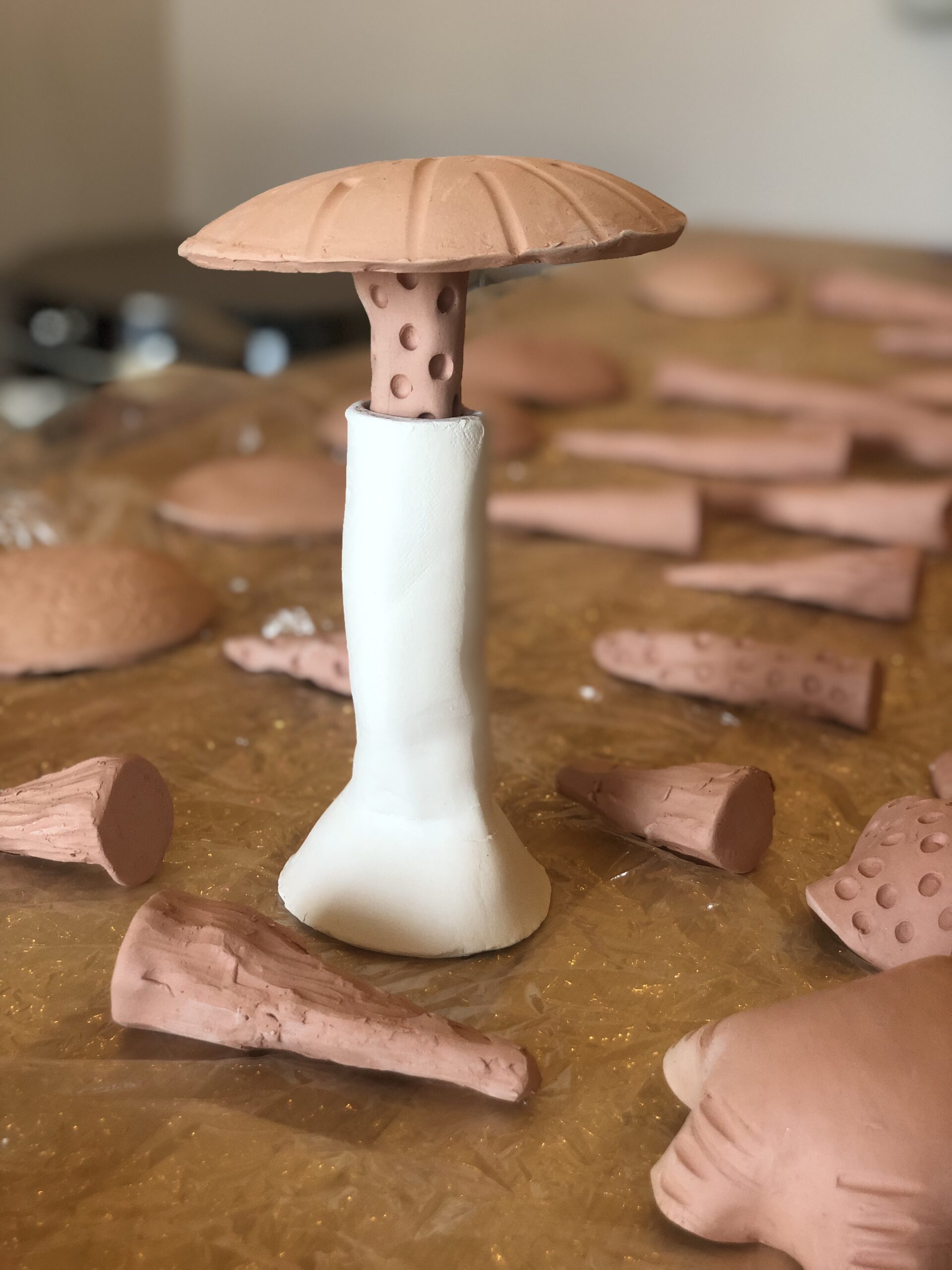
At Potterings, coil building is one of our favorite ways to help students slow down, connect with the clay, and really understand how form comes together. It is one of the oldest pottery techniques in the world, and it is still one of the most versatile. Whether you are brand new to clay or ready to refine your skills, mastering coils opens the door to everything from simple bowls to sculptural statement pieces.
Let’s start with the basics and then level up.
What Is Coil Construction?
Coil building is exactly what it sounds like. You roll out rope-like lengths of clay and stack them to create walls and forms. Coils give you total control over shape, thickness, and design. You can go tall, wide, curved, or organic.
It is also incredibly forgiving. If something goes wonky, you can reshape, reinforce, or redesign as you go.
Step One: Rolling Good Coils
Great design start with great coils.
Start with well wedged clay. Air bubbles and inconsistent moisture will cause weak spots later. Cut a chunk of clay and gently form into a clay sausage.
Tips for beginners
- Use your whole hand, not just your fingertips. This keeps coils even.
- Roll from the center outward to avoid thin ends.
- Let gravity help by rolling the clay away and towards you without downward pressure.
- Aim for a consistent thickness, usually about the width of your finger for small to medium projects.
- If cracks appear, your clay is too dry. Lightly mist your hands or the clay.
Intermediate tip
Try rolling coils on different surfaces. Canvas creates slight tooth and helps coils grip each other. A smooth table makes sleeker coils that are great for visible decorative lines.
Building a Strong Base
Before stacking coils, you need a base.
Roll out a slab about 1/4 to 3/8 inch thick. Cut your desired shape. Compress both sides with a rib or your fingers. This step is often skipped, but compression aligns clay particles and helps prevent cracks.
Depending on the clay, you may need to score and slip the edge of the base where your first coil will sit. We use the ancient method of pressing the clay coil around the outside of the slab right into the board. Press the first coil firmly into place, then blend the inside seam with your finger or a small tool. The outside can stay visible or be blended depending on your design.
Stacking and Joining Coils
Add one coil at a time. Score between every layer. Yes, every layer. This is what keeps your pot from splitting at the seams later.
As you stack:
- Gently press each coil down and inward to bond it with the one below.
- Pinch up to thin the walls.
- Blend the inside seams for strength.
- Decide if you want the outside coils visible for texture or smoothed for a clean surface.
Turn your piece as you work. Building from one side only leads to lopsided walls. To make the walls go outwards, pinch your fingers away from each other. To make the walls to inwards, pinch your fingers towards each other.
Wall control
- For straight walls, stack coils directly on top of each other.
- For outward curves, place each new coil slightly to the outside.
- For inward curves, step each coil slightly toward the center.
Managing Moisture and Shape
Coil pots can slump if they get too soft.
If your walls start to wobble, pause. Let the piece firm up to a soft leather hard before continuing. You can loosely cover it with plastic so it does not dry too fast. Hitting the piece with a hairdryer will speed this process.
Use a rib, paddle, or your fingers to gently compress the walls as you build. Light paddling on the outside while supporting the inside with your hand helps even out thickness and strengthen the form.
Smoothing and Refining
Once your basic shape is done, it is time to refine.
For a smooth finish:
- Use a serrated rib to scrape and compress the surface.
- Blend remaining seams.
- Add a little water sparingly, too much weakens the clay.
For a textured look:
- Leave coils visible.
- Carve into them.
- Press stamps or found textures into the surface.
Intermediate Techniques to Try
Ready to push your skills? Here are a few ways to level up your coil work.
Altering the Form
After building a cylinder, gently paddle one side to create an oval. Push from the inside to make soft bellies or shoulders. Controlled distortion adds life and movement.
Thinning and Lifting
As you gain confidence, try using thinner coils and building taller forms. Support the inside with your hand or a soft sponge while compressing the outside to prevent collapse.
Decorative Coil Patterns
Instead of blending every coil, use contrasting clay bodies or slip colored coils to create stripes, spirals, or layered patterns. You can also twist coils before attaching them for a rope-like texture.
Adding Attachments
Coil built forms pair beautifully with hand built handles, spouts, and sculptural elements. Always score and slip thoroughly, and support attachments while they set up so they do not pull away.
Common Problems and Fixes
Cracking at the seams
Usually from poor scoring and slipping or uneven drying. Slow down and cover your piece loosely between sessions.
Uneven walls
Use a needle tool to check thickness. Scrape thicker areas and compress thin ones gently from both sides.
Slumping
Your clay is too wet or the walls are too thin for the height. Let it firm up before adding more coils.
Coil building teaches patience, observation, and touch in a way few other techniques do. Every coil is a decision. Every curve is shaped by your hands, not a machine. Whether you are making your very first bowl or experimenting with tall sculptural vessels, coils give you freedom to build forms that truly feel handmade.
Next time you attend an open studio at Potterings, grab a board, roll a few coils, and see where the clay wants to go.