
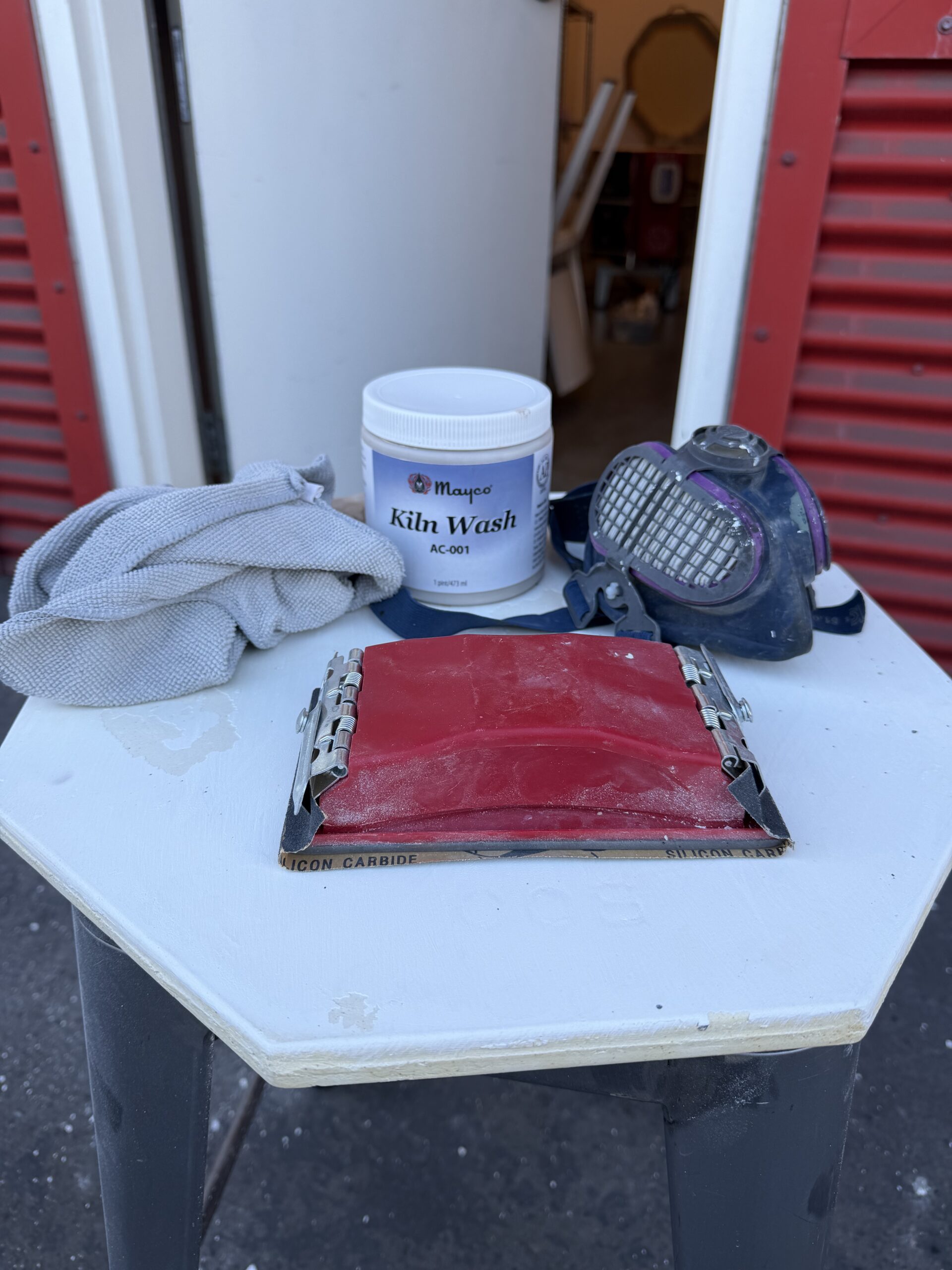
Why Potters Use Kiln Wash
By: Potterings Studio, West Seattle
If you’ve ever opened a kiln and discovered a puddle of glaze welded to a kiln shelf, you already understand the importance of kiln wash.
Kiln wash is one of the least glamorous parts of pottery, but it quietly protects some of the most expensive equipment in the studio. A properly prepared kiln shelf can last for years. An unprotected shelf can be permanently damaged in a single firing.
If you are new to kiln ownership, be sure to check out our private lesson page. One of our custom one-on-one offerings is kiln firings which includes how to maintain your own studio kiln.
What Is Kiln Wash?
Kiln wash is a protective coating brushed onto kiln shelves to prevent glaze drips from sticking directly to the shelf surface during firing.
Think of it as sacrificial armor for your kiln shelves. If glaze runs, ideally it sticks to the kiln wash instead of fusing permanently to the shelf itself.
Kiln wash is especially important for:
- Functional pottery with fluid glazes
- Test tiles
- Crystalline glazes
- Beginner studios
- Community firing environments
- Any firing where glaze accidents are possible
Even experienced potters occasionally have glaze runs. Kiln wash gives you a second chance.
What Is Kiln Wash Made Of?
Most traditional kiln washes are made from a combination of refractory materials that can withstand extreme heat without melting.
The most common ingredients are:
Alumina Hydrate
Alumina helps resist melting and prevents glaze from bonding to the shelf surface.
Kaolin
Kaolin clay helps the kiln wash adhere to the shelf and creates a brushable coating.
Some commercial kiln washes may also contain:
- Silica
- Zircon
- Calcined alumina
- Other refractory materials
A classic homemade kiln wash recipe is:
- 50% alumina hydrate
- 50% kaolin
Different firing temperatures and kiln types may use slightly different formulations. We buy our dry kiln wash (goes up to cone 10) locally from Seattle Pottery Supply, but you can also purchase from most any online pottery supply reseller (dry or pre-mixed).
How to Prepare a Kiln Shelf
Before applying kiln wash, the shelf needs to be clean and dry.
Step 1: Scrape Off Old Glaze Drips
Use a metal scraper, putty knife, or carbide scraper to remove any glaze spots or loose kiln wash.
The smoother the shelf, the better the new coat will perform.
Step 2: Sand Carefully
Lightly sand rough areas with a rubbing stone or sanding block. Wear a proper respirator whenever sanding kiln materials.
Avoid gouging the shelf surface.
Step 3: Remove Dust
Wipe the shelf with a damp sponge or cloth to remove loose dust before applying kiln wash.
Dust trapped under kiln wash can cause flaking later.
How to Apply Kiln Wash
Kiln wash should be mixed to the consistency of thin cream.
Application Tips
- Stir frequently while working because materials settle quickly
- Use a wide soft brush
- Apply thin, even coats
- Brush alternating directions between coats
Most potters apply 2–3 thin coats rather than one thick coat.
Avoid:
- Thick ridges
- Drips
- Heavy buildup
A thick coat is more likely to crack and flake during firing.
Important:
Do not kiln wash both sides of the shelf. Coat only the top surface. Coating both sides can increase the chance of warping.
When Should You Reapply Kiln Wash?
Kiln wash does not need to be reapplied after every firing.
You should reapply when:
- Bare shelf becomes visible
- The surface begins flaking
- Large sections chip away
- Glaze drips damage the coating
- The shelf surface becomes uneven
In active community studios, shelves may need touch-ups frequently. In home studios, a good coating can last many firings.
Spot repairs are completely normal.
How to Scrape Down Kiln Shelves
Eventually every kiln shelf needs maintenance.
For Minor Glaze Drips
Use:
- A carbide scraper
- Paint scraper
- Putty knife
Work slowly and keep the tool nearly flat to avoid gouging the shelf.
For Stubborn Glaze Spots
A kiln shelf rubbing stone works well for smoothing damaged areas after scraping.
Safety Matters
Always wear:
- Eye protection
- A respirator or dust mask rated for fine particles
Kiln shelf dust should never be inhaled.
A Final Note
Kiln wash is one of those quiet studio habits that saves enormous frustration later.
A few extra minutes spent maintaining kiln shelves can prevent:
- Ruined shelves
- Damaged pottery
- Uneven firings
- Expensive replacements
In a shared studio especially, kiln wash is part of taking care of the community equipment and helping the next firing go smoothly.
Because sooner or later, every potter has a glaze run.
Have questions about kiln wash, glaze firing, or pottery studio techniques? Leave a comment below or stop by the Potterings studio in West Seattle. We love helping potters troubleshoot kiln problems and build confidence in the firing process.