
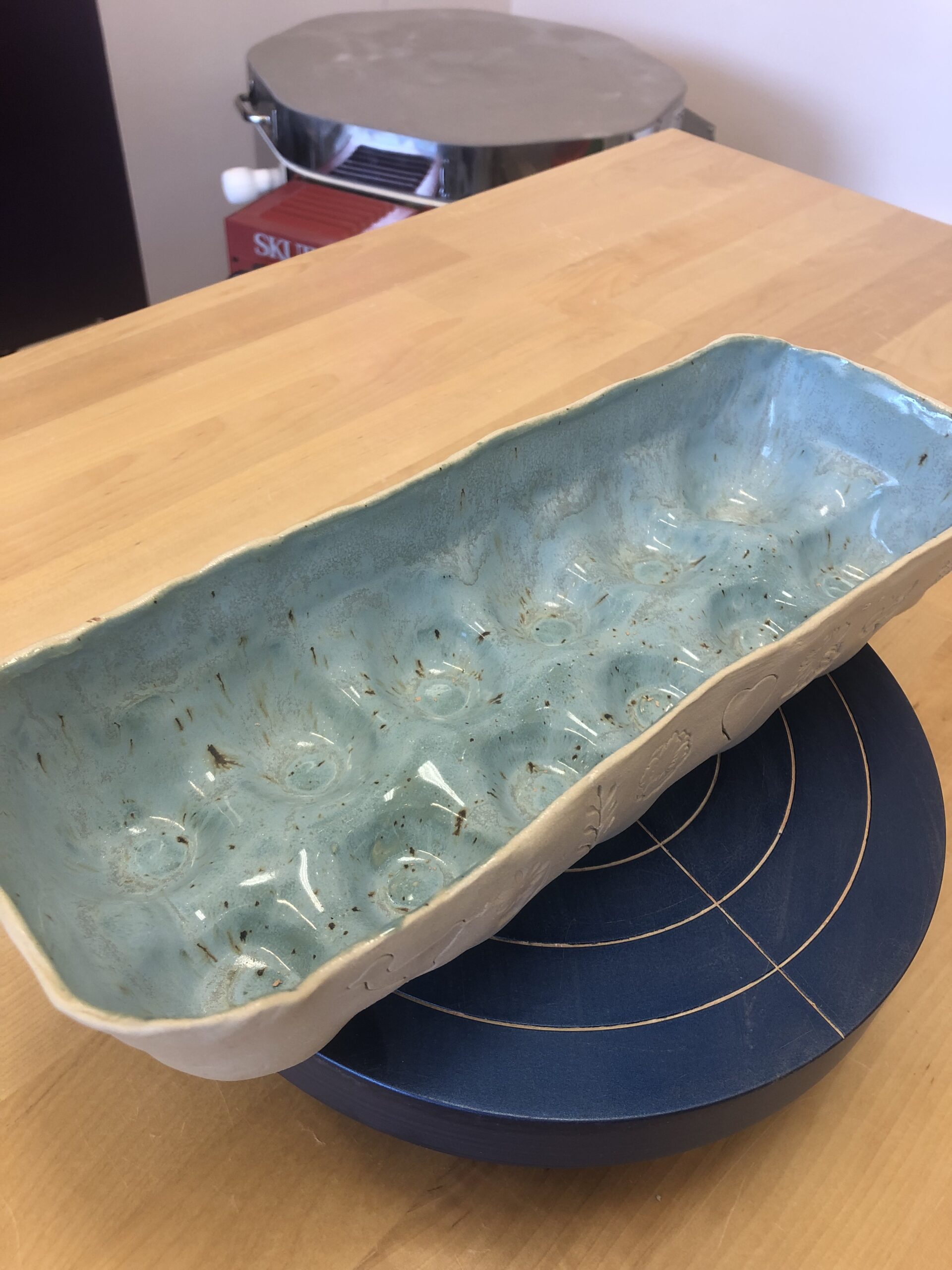
As a beginning potter, one of the first things you’ll fall in love with—besides pulling your first wonky cylinder—is color. Underglazes open up a whole world of design possibilities, from painterly brushwork to crisp stencils and vibrant patterns. But a common question that pops up in class is:
Should I underglaze on leatherhard clay or wait until after the bisque firing?
The short answer is: you can do either—but each approach comes with its own set of benefits and challenges. Let’s break it down so you can choose the method that fits your piece and your process best.
Underglazing on Leatherhard Clay
This is when you apply underglaze to your piece while the clay is still moist enough to carve but dry enough to handle without distortion—usually at the leatherhard or bone-dry stage.
Benefits:
- Sharp linework: Underglaze sinks into the surface, which means less smudging and very crisp results, especially for carving (sgraffito) or fine details.
- Texture play: You can carve, scratch, or impress textures into the underglaze at this stage, offering more control over the final surface.
- Efficiency: You’re decorating and shaping at the same time, which can streamline your workflow.
Drawbacks:
- Fragility: Leatherhard clay is delicate. Handling your piece while painting or stenciling can lead to chips or breaks.
- Color shift: Some underglazes can look dull or chalky on greenware, making it hard to predict the final color.
- Water sensitivity: Adding too much water from your brush or sponge can cause cracking, warping, or even collapse.
Underglazing on Bisqueware
This method involves painting your underglaze onto pieces that have already been bisque-fired (the first firing that hardens clay without vitrifying it).
Benefits:
- Durability: Bisqueware is much sturdier and easier to handle, especially for beginners.
- Color clarity: Colors show more true to their final appearance, helping you make better design choices.
- Layering options: You can layer colors, do washes, or wipe away underglaze to reveal texture underneath with greater control.
Drawbacks:
- Surface slippage: Because bisqueware is more porous, underglaze can sometimes bead up or go on unevenly if your piece wasn’t cleaned well.
- More coats needed: You’ll often need 2–3 coats for rich, even color—this can take longer.
- Less integration: Underglaze sits more on the surface than in it, which can feel different in texture and finish depending on your glaze.
So, Which Should You Choose?
It depends on what you’re making and how you like to work. Here’s a quick guide:
| You want… | Try this! |
|---|---|
| Crisp lines or carved details | Leatherhard with sgraffito |
| Bright, predictable colors | Bisqueware painting |
| Less handling of fragile work | Wait until after bisque |
| Painterly brushstrokes or washes | Bisqueware |
| More integrated surface designs | Leatherhard |
Teacher’s Tip:
If you’re still figuring it out, try a small test tile both ways. Keep notes. See what works best with the glazes and clays you’re using. There’s no wrong answer, just different tools for different creative goals.
Whether you underglaze before or after the bisque firing, the key is to experiment. Each piece teaches you something new—and that’s the joy of clay. All of the Potterings workshops, classes, and open studios include glazing. What makes Potterings unique is that the potter can choose to come back to the studio to learn how to glaze; it is included in the cost! Check out the current workshops, or sign up for an open studio.
Happy glazing!