
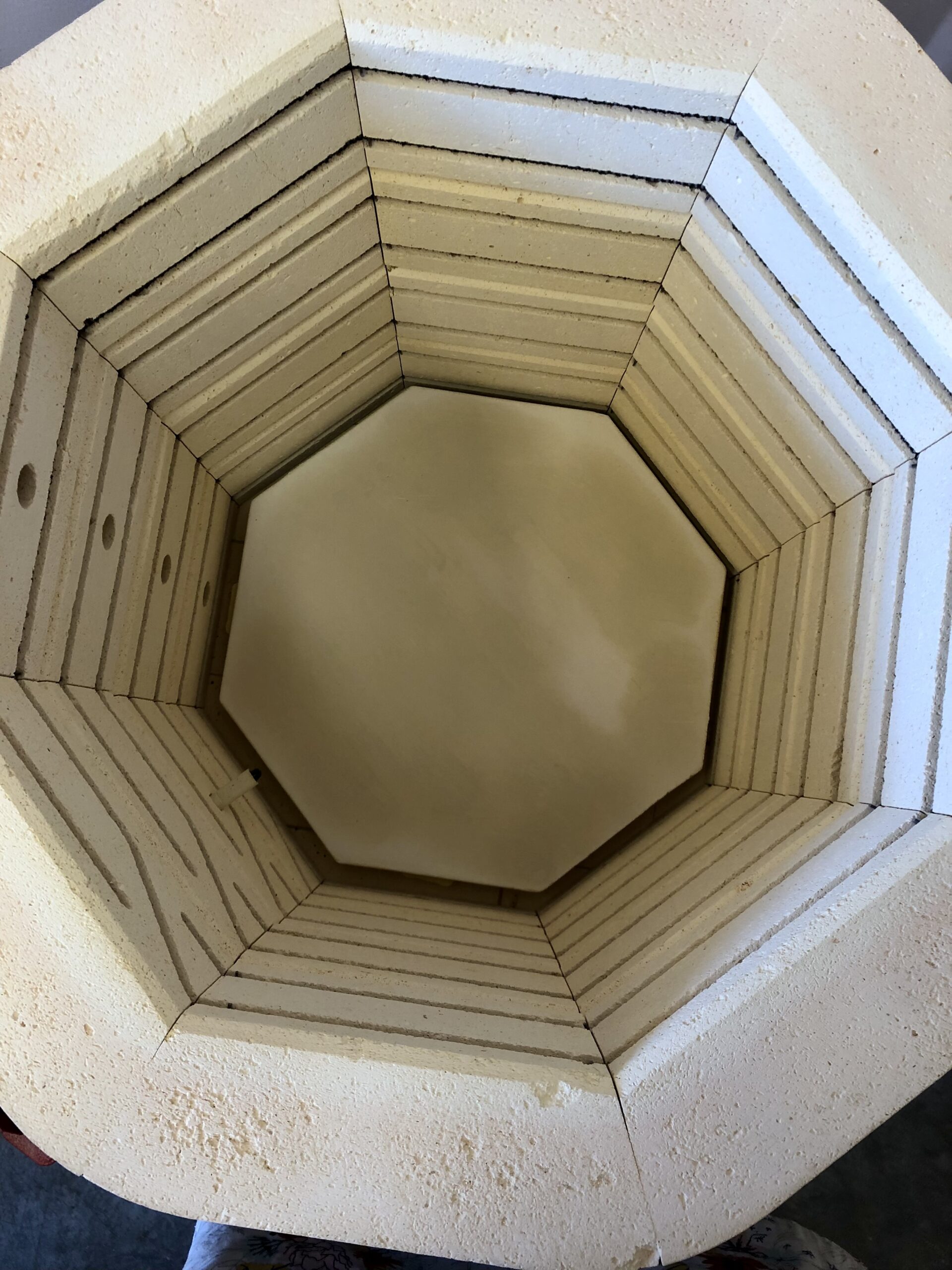
If you’re new to handbuilding ceramics, one of the most exciting (and mysterious!) moments is when your piece goes into the kiln for its first firing. This step is called bisque firing, and it’s what transforms your fragile clay into something strong enough to glaze and finish.
At Potterings, we bisque fire all student work to cone 04 (1,940 degrees fahrenheit). Here’s what that means, and what’s actually happening inside the kiln.
Before Bisque: Clay Is Fragile
When you finish handbuilding a piece, whether it’s a mug, bowl, sculpture, or planter, it starts out as wet clay. As it dries, it becomes bone dry, meaning all visible moisture has evaporated.
Even at this stage, your piece is:
- Very fragile
- Chalky and dusty
- Easily broken or dissolved by water
That’s why we don’t glaze raw clay. First, it needs to be bisque fired.
Step 1: Water Is Driven Out
As the kiln slowly heats up, any remaining physical water trapped in the clay is released as steam. This happens at relatively low temperatures but is critical, if heated too fast, trapped moisture can cause cracking or breakage.
This is why proper drying before firing is so important.
Step 2: Clay Chemically Changes
As temperatures continue to rise, the clay undergoes a permanent chemical transformation (1,650 degrees fahrenheit). This is the moment when clay officially becomes ceramic.
Once bisque fired:
- Your piece can no longer return to clay
- Water will not dissolve it
- The structure becomes stable and durable
This change is irreversible, and essential.
Step 3: Organic Materials Burn Away
During bisque firing, the kiln burns off:
- Organic material in the clay
- Carbon and impurities
- Paper fibers or additives (if present)
This process cleans and purifies the surface, preparing it for glaze.
Step 4: The Piece Becomes Porous
At cone 04, your pottery becomes:
- Hard and sturdy
- Still porous enough to absorb glaze
This porosity is exactly what we want. When you dip, brush, or pour glaze onto bisque-fired pottery, the glaze sticks and dries evenly because it’s absorbed into the surface.
What Your Pottery Looks Like After Bisque
After bisque firing at Potterings, your piece will:
- Feel lighter than before
- Have a matte, chalky surface
- Be strong enough to handle and glaze
- Still be breakable if dropped
This is the perfect stage for glazing.
Why Potterings Uses Cone 04
Cone 04 is a standard bisque temperature for handbuilt pottery because it:
- Creates a strong but absorbent surface
- Works well with our studio glazes
- Reduces glaze defects like crawling or pinholing
- Is ideal for beginner work
It gives you the best chance for glaze success.
What Comes Next?
After bisque firing, your piece is ready for:
- Glazing
- A second firing (glaze firing)
- Becoming food-safe (depending on glaze and form)
Bisque firing is the quiet hero of the pottery process, it sets the stage for everything that comes next.
If you ever have questions about firing, glazing, or what’s happening to your work in the kiln, just ask. That’s what we’re here for.
Happy handbuilding at Potterings