
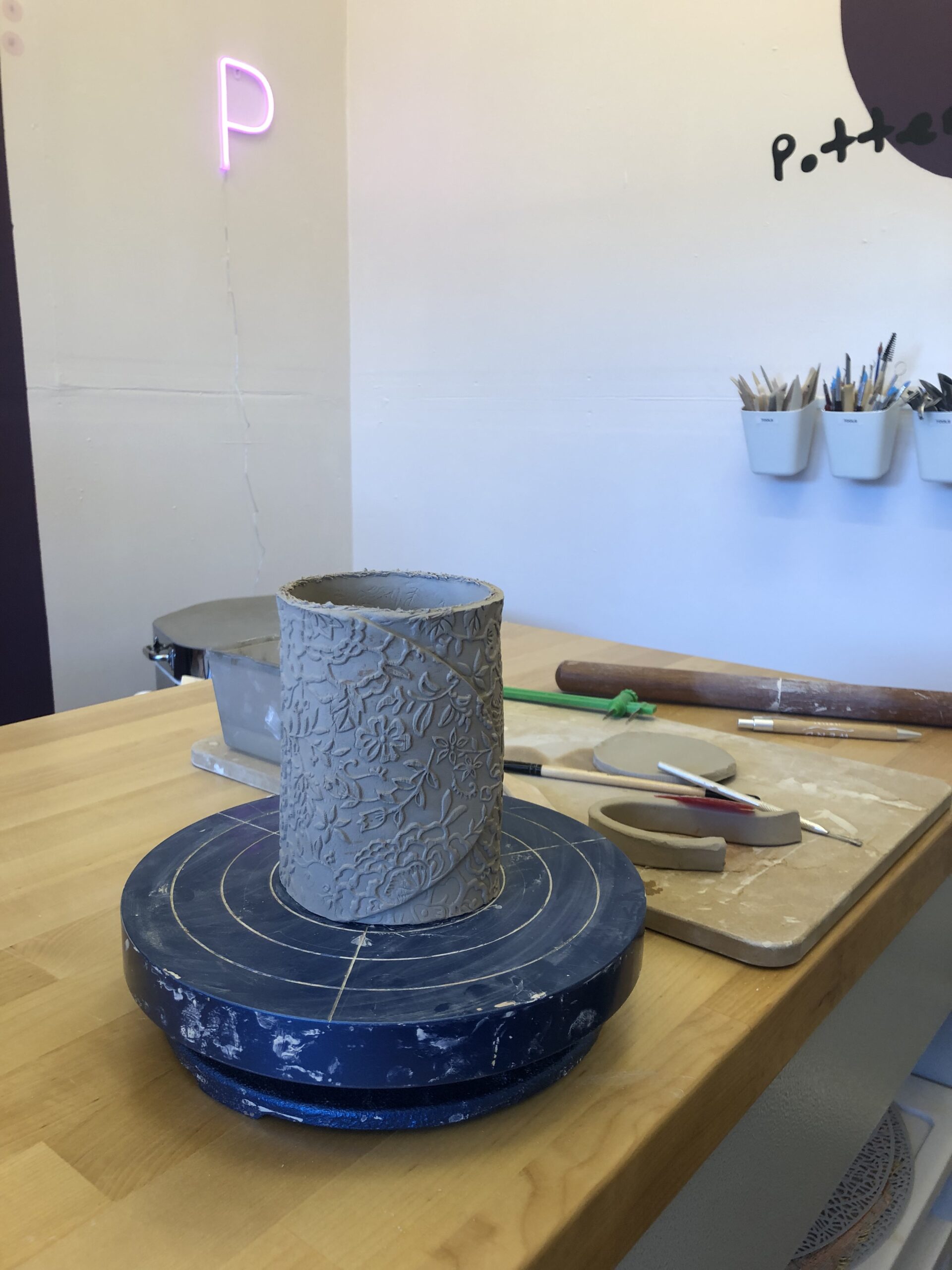
One of the simplest ways to elevate the look of a hand-built piece is a clean, even rim. Beginners often struggle with wavy, slanted, or chunky edges, but with a few techniques and a little patience, you can create rims that look intentional and professional. Here are 10 practical tips to help you get there.
1. Start With Consistent Wall Thickness
If the walls of your pot are uneven, the rim will always reflect that. Before you even think about cutting, run your fingers around the upper edge to feel for thick or thin spots and compress or trim the wall so it’s uniform.
2. Let the Clay Reach Soft-Leather Hard
Cutting a rim on clay that’s too soft causes dragging, while cutting on clay that’s too dry can cause cracking. Wait until the clay resists pressure but is still flexible, this is the sweet spot for clean cuts.
3. Use a Flexible Metal Rib to Find the High Spots
Gently scrape the rim with a flat metal rib. You’ll hear and feel where the rib catches on high spots. This gives you a quick visual and tactile map of where you’ll need to trim.
4. Mark a Guide Line With a Needle Tool
Spin the pot on a banding wheel (if you have one) while lightly holding a needle tool at the height you want the rim. This creates a subtle guideline to follow when you cut.
5. Hold Your Cutting Tool Still – Let the Pot Move
Whether you’re using a fettling knife or a needle tool, keep your hand steady and rotate the pot toward the blade. When the pot, not the too, does the moving, you get a straighter, more even cut.
6. Cut in Multiple Light Passes, Not One Heavy Slice
Trying to cut all the way through at once can force the clay downward and create a jagged edge. Instead, use several gentle passes. It takes longer, but it leaves the rim much cleaner.
7. Compress After Trimming
A freshly cut rim is sharp and vulnerable to cracking. Use a damp sponge, chamois, or soft rubber rib to compress the edge. This not only strengthens the rim but also smooths out small inconsistencies.
8. Check From Multiple Angles
Set your pot on the table and get eye-level with the rim. Rotate it and look from all sides. Even experienced potters miss uneven spots when looking top-down only.
9. Use a Banding Wheel for Precision
If you don’t throw on the wheel, a simple banding wheel is the next best thing. It gives you controlled rotation, steadier cutting, and a more uniform finish, especially great for cylinders and bowls.
10. Practice With “Test Pots”
Make a few quick mini-forms just to practice rim trimming. The more repetitions you get without worrying about perfecting a full project, the faster your confidence (and muscle memory) will grow.
Cutting an even rim might seem like a small detail, but it’s one of the most visible markers of craftsmanship. With these tips, and a little practice, you’ll start seeing cleaner, more intentional rims on every piece you make. We teach these techniques in the Potterings workshops. Happy potting!